
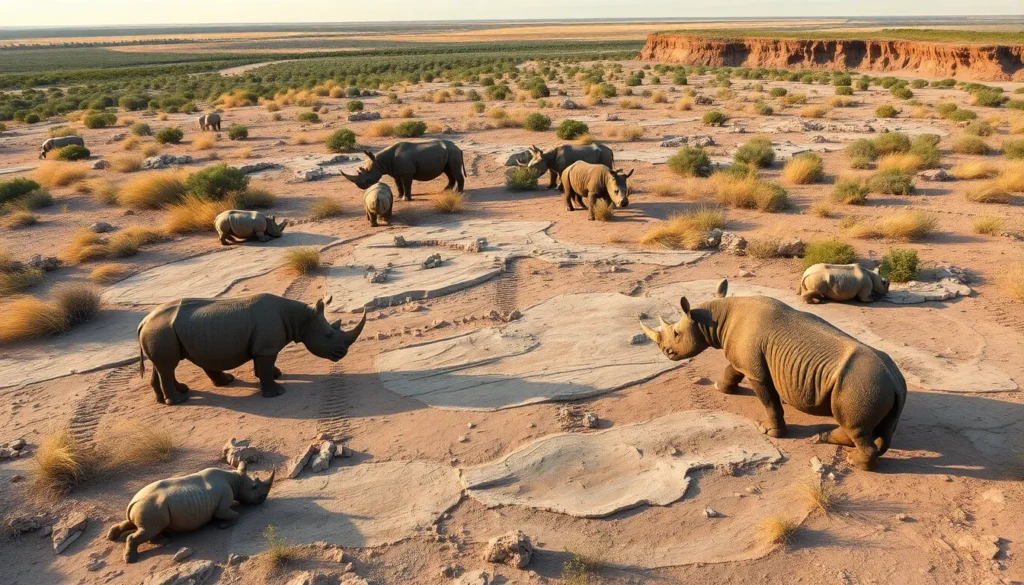
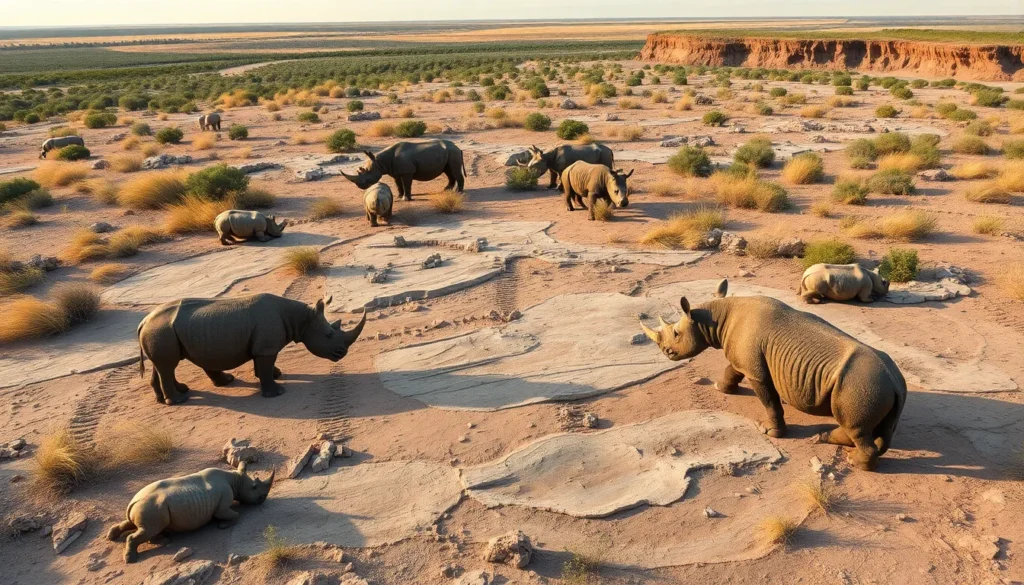




Nestled in the heart of Nebraska lies a treasure trove of prehistoric wonders that’ll make any dinosaur enthusiast’s heart race. The Ashfall Fossil Beds aren’t just a graveyard for ancient rhinos; they’re a time capsule of life from millions of years ago. Imagine walking through a landscape where the air was filled with the sounds of massive creatures munching on lush vegetation, only to find out they met their end in a volcanic ash shower. Talk about a dramatic exit!
Overview of Ashfall Fossil Beds
Ashfall Fossil Beds, located in northeastern Nebraska, serves as a remarkable paleontological site. This destination showcases the preserved remains of ancient creatures, particularly rhinos, that perished during the late Miocene epoch, approximately 12 million years ago. Volcanic ash created a unique preservation environment, entombing the remains and preventing decay.
Unique fossil discoveries abound within this site. Notably, it contains a significant number of two-toed rhinos known as Teleoceras. These rhinos exhibited distinct adaptations to their environment, reflecting the diverse ecosystems present during their time. Other species discovered include ancient horses, camels, and various aquatic organisms, painting a detailed picture of the ancient habitat.
Educational opportunities at Ashfall Fossil Beds thrive for visitors. Interpretation centers and guided tours offer insights into the significance of fossil deposits and the history of Earth’s climates. Engaging with these resources enables individuals to appreciate the geological and paleontological importance of the site.
Importance extends beyond educational aspects. Scientific research conducted at Ashfall leads to advancements in understanding ancient ecosystems and extinct species. Collaborative efforts among universities and researchers contribute to ongoing discoveries, further establishing Ashfall as an essential location for paleontology.
Overall, Ashfall Fossil Beds represents a vital window into prehistoric life. Discovering the well-preserved remains provides valuable insights into evolutionary processes and environmental changes over millions of years. Such contributions to science solidify the significance of this site as a treasure trove of ancient knowledge.
Geological Significance
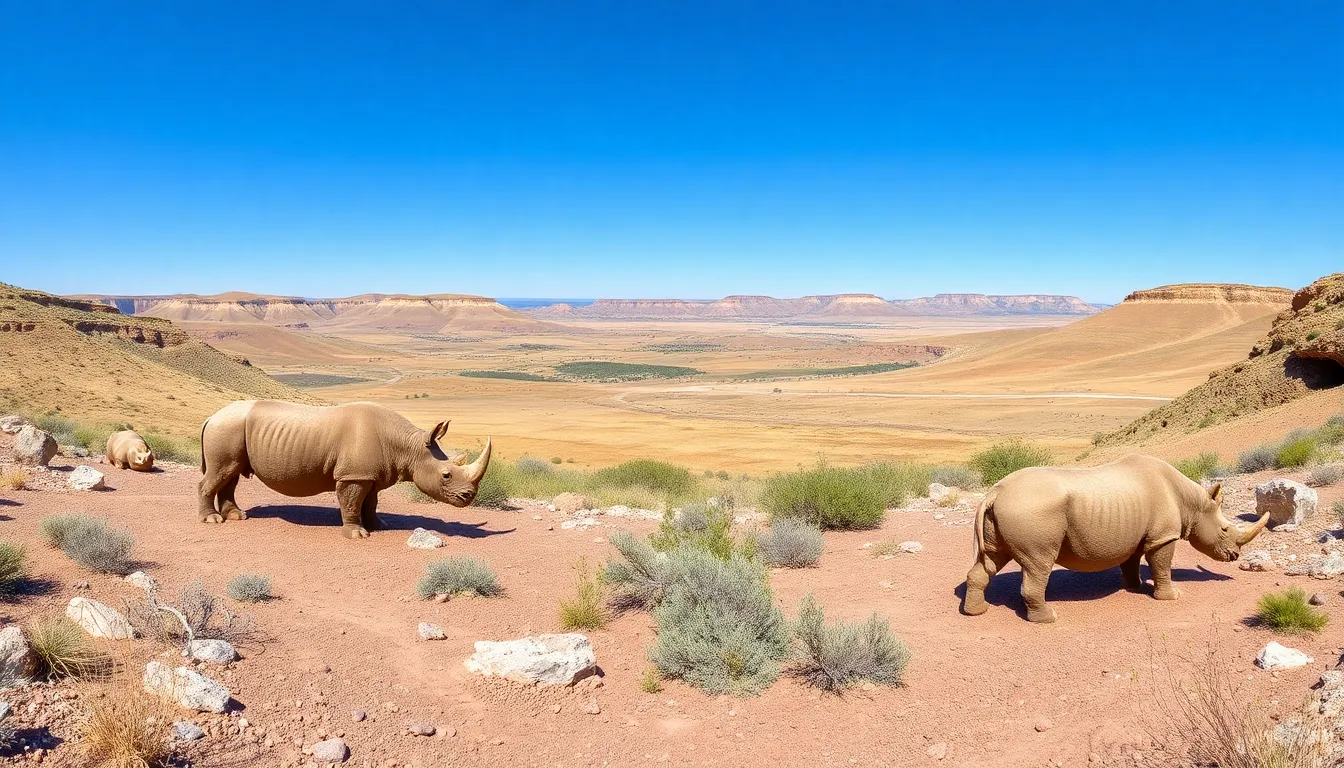
The Ashfall Fossil Beds hold critical geological importance due to their unique preservation of ancient life. Formed around 12 million years ago, volcanic ash rained down on a diverse ecosystem, leading to the exceptional conservation of flora and fauna.
Origin of the Ashfall Fossil Beds
Ashfall Fossil Beds originated from a volcanic eruption that blanketed the area in fine ash. This event suffocated large creatures, including species of rhinos and early ancestors of mammals. The ash created an anoxic environment, inhibiting decomposition and allowing fossils to remain intact. Over millions of years, these beds became a rich source of paleontological treasures, providing rare insights into past life.
Importance of the Eocene Epoch
The Eocene Epoch is significant as it marks a period of substantial evolutionary change. During this time, mammals began to flourish, adapting to various environments. This epoch laid the groundwork for modern ecosystems, highlighting the evolution of species such as ancient horses and two-toed rhinos. Discoveries at Ashfall contribute to understanding these evolutionary processes, offering a deeper comprehension of how life has evolved over time.
Discovery of Nebraska Rhinos
The Ashfall Fossil Beds have revealed significant findings regarding Nebraska’s prehistoric rhinos.
Notable Discoveries
Among the most notable discoveries are Teleoceras remains, which represent a unique branch of the rhinoceros family. These two-toed rhinos lived during the late Miocene epoch, around 12 million years ago, providing crucial insights into ancient life. Fossilized bones, teeth, and footprints found at the site illustrate the physical characteristics and behavior of these creatures. Additionally, associated fauna like ancient horses and camels shed light on the ecosystem dynamics during that period. Excavations frequently uncover new specimens, further enriching the understanding of Nebraska’s prehistoric inhabitants.
Research Methods
Paleontologists employ several research methods at Ashfall Fossil Beds to uncover valuable information. They meticulously excavate sites, often using hand tools for precision in delicate areas. Fieldwork involves mapping fossil locations to maintain accurate records. In addition, sediment analysis occurs to determine the paleoenvironment and its changes over time. Imaging techniques, such as CT scans, are utilized to visualize internal structures of fossils without damaging them. Collaborations with universities help drive research forward, ensuring a comprehensive approach to understanding ancient species and their ecosystems.
Ecology and Environment
The Ashfall Fossil Beds exhibit an intriguing ecology shaped by unique climate conditions and a diverse array of flora and fauna.
Climate Conditions
Climate conditions during the late Miocene epoch favored the growth of rich vegetation. The region experienced a warm and temperate environment that facilitated the flourishing of numerous plant species. Moisture levels were optimal, supporting dense forests and grassy plains. These stable climate patterns led to abundant resources for megafauna, including Teleoceras. Changes in climate dynamics later influenced the ecosystem, allowing for the development of varied habitats ideal for an array of species.
Flora and Fauna
Flora at Ashfall Fossil Beds includes diverse plant life, with both trees and shrubs that thrived in the lush environment. Species such as early grasses and deciduous trees provided sustenance for large herbivores. Fauna comprised not just Teleoceras, but a range of creatures including ancient horses, camels, and smaller mammals. This diverse assemblage illustrates a complex food web, where herbivores interacted with their environment while predators maintained balance within the ecosystem. Discoveries at the site continue to shed light on these ancient species and their interrelations.
The Ashfall Fossil Beds stand as a remarkable testament to Nebraska’s prehistoric past. This unique site offers invaluable insights into the lives of ancient creatures like the Teleoceras rhinos. The exceptional preservation of fossils within volcanic ash highlights the dramatic events that shaped the region’s ecosystem.
Visitors to Ashfall not only witness the remnants of a bygone era but also engage with ongoing scientific research that continues to uncover the mysteries of these ancient species. The blend of education and exploration makes Ashfall a must-visit destination for anyone interested in paleontology and the evolution of life on Earth. As discoveries unfold, the Ashfall Fossil Beds will undoubtedly remain a vital resource for understanding our planet’s rich history.